
 Mobile App Development
 Software Development
 AI Solutions & Automation
 IoT Solutions
 Web Development
 Cyber Security
AI Development
Company in Australia
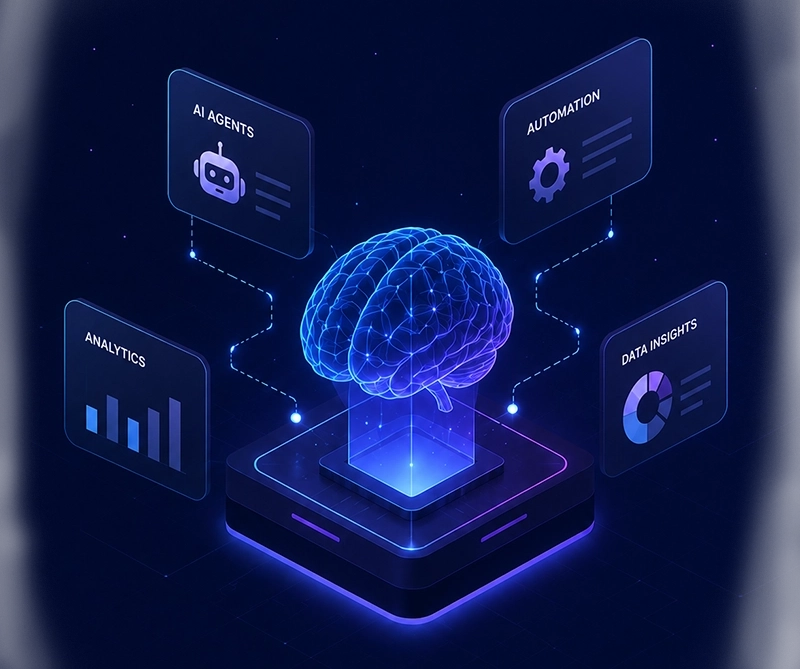
AI Development Services Built Around Your Business Goals
Supportsoft Technologies helps Australian businesses plan, develop and integrate practical AI solutions. From AI prototyping and chatbots to large language model (LLM) integration, machine learning and computer vision, we help identify relevant opportunities and develop solutions around real business needs.
Business-Led AI Development
Solutions shaped around your business objectives, users and workflows.
Practical AI Integration
Connect relevant AI capabilities with existing systems and business processes.
Responsible Implementation
Consider data requirements, testing and suitability for real-world use before deployment.

10+
Years Experience

1,000+
Projects Delivered

99%
Client Satisfaction
AI Development Services for
Australian Businesses
From validating an AI use case to integrating intelligent capabilities into software, Supportsoft Technologies helps Australian businesses explore and develop solutions around their goals, data and workflows. Our capabilities span AI prototyping, chatbots, large language model integration, machine learning, computer vision and custom AI applications.

AI Strategy & Prototyping

AI Chatbots & Virtual Assistants
LLM & Generative AI Integration
Machine Learning & Predictive Analytics
Computer Vision & Image Analysis

Custom AI Applications

Business-Focused AI
Start with your business objectives, user needs and practical use cases.

Responsible AI Implementation
Consider data access, privacy, testing and appropriate human oversight during solution planning.

Designed for Future Development
Consider maintainability, integration requirements and how the solution may evolve as business needs change.

Collaborative Technical Delivery
Work with our team to clarify requirements, evaluate options and align the proposed solution with your project goals.
From AI Opportunity to Deployment and Improvement
Our approach connects business requirements with practical AI development. We help assess use cases, understand data and integration needs, develop suitable solutions, and evaluate how they perform before deployment. The process is shaped around each project's scope, systems and objectives.

Requirements-Led
Define the business need before selecting an AI approach.

Data-Aware Planning
Consider data quality, availability and access requirements early.

Integration-Focused
Plan how AI capabilities will work with existing systems and workflows.

Quality-Conscious
Evaluate outputs and relevant failure cases before release.
AI Solutions for Industry-Specific Business Needs
AI applications work best when they address the real needs of a business, its users and its workflows. Supportsoft Technologies helps Australian organisations explore relevant AI use cases, from document processing and predictive analytics to intelligent assistants and workflow automation. Each opportunity should be assessed against its data requirements, integration needs and practical objectives.
Business-First AI Development
We start with the business challenge and evaluate where AI may offer a practical fit.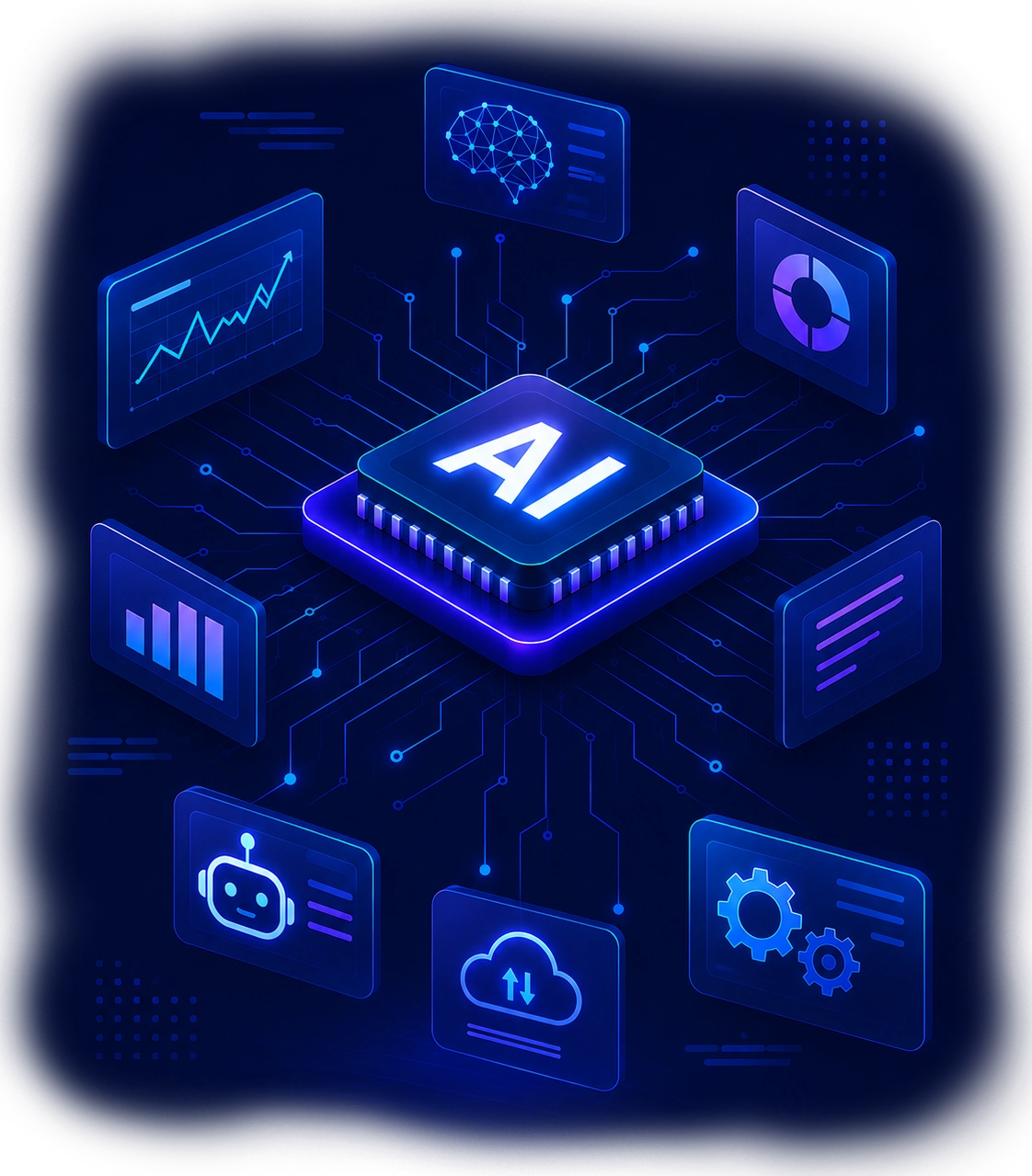
Business-First Planning
Define the problem and intended outcome before choosing an AI approach.

Data-Aware
Solutions
Assess data availability, quality and access requirements.

Integration Considered Early
Plan how proposed AI capabilities may work with existing systems.

Responsible Evaluation
Consider reliability, privacy and human oversight where relevant.
Why Businesses Are Investing in Artificial Intelligence
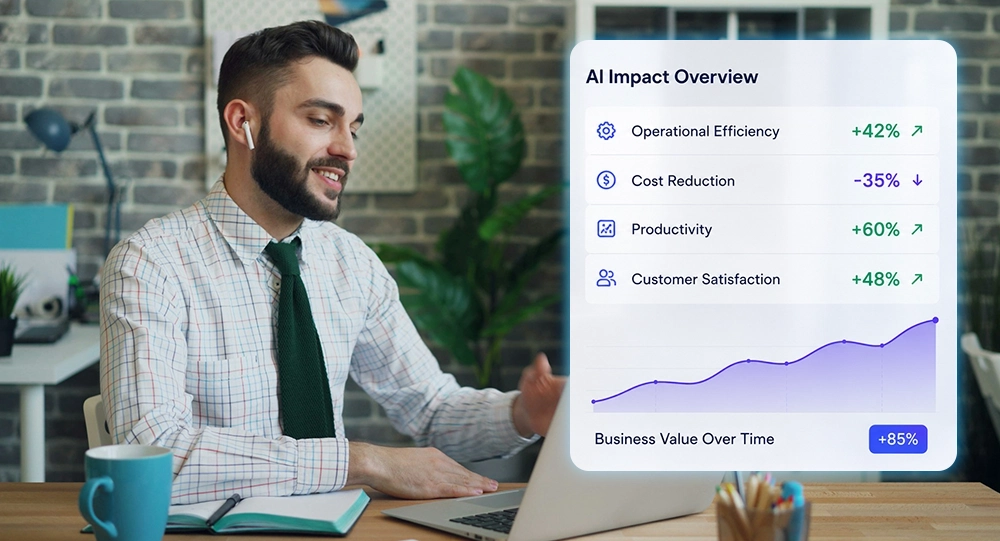
AI can help businesses reduce repetitive work, make better use of information and improve how teams serve customers. The value depends on the problem being addressed, the quality of available data and how well a solution fits existing workflows. Supportsoft Technologies helps Australian businesses assess relevant opportunities and plan AI applications around clear business objectives.
AI should solve a defined business problem.
Focus on suitable use cases, practical objectives and appropriate human oversight—not technology for its own sake.

Reduce Repetitive Manual Work
Use AI to assist with document handling, information classification and routine process steps where appropriate, giving teams more time for work that requires human judgement.

Support Better Business Decisions
Machine learning and data analytics can help identify patterns in available business data and provide additional context for decision-making. Outputs should be evaluated before they inform consequential decisions.

Improve Customer Interactions
AI chatbots and virtual assistants can help answer routine questions, guide users towards relevant information and direct complex enquiries to the appropriate team.

Make Business Information Easier to Use
Large language models and document intelligence can help authorised users find, organise and summarise relevant information across suitable business knowledge sources.

Connect Business Workflows
AI integrations can bring intelligent capabilities into existing applications and processes, helping reduce unnecessary handoffs while maintaining appropriate data-access controls.

Develop New Digital Capabilities
Custom AI features can support applications such as intelligent recommendations, information assistants and automated classification when they meet genuine user needs and business objectives.
Relevant Use Cases
Select AI applications that address a specific business need.
Data Quality
Assess whether available data is suitable for the intended task.
Human Oversight
Keep appropriate review and accountability for important decisions.
Evidence Based Measurement
Define how success will be evaluated before assessing business impact.
Our AI Development Process
From Business Need to Deployment
We take a structured approach to AI development, connecting business objectives with suitable AI methods, data requirements and system integrations. From initial discovery to testing and deployment, each stage is shaped around the project's scope, intended users and practical requirements.

Discovery & Requirements
We clarify the business challenge, intended users and project objectives before selecting an appropriate AI approach.
- Business Problem Definition
- AI Use Case Prioritisation
- Feasibility Assessment
- Success Criteria

Strategy & Solution Design
We plan the solution architecture, identify suitable AI approaches and define the data, integration and delivery requirements.
- AI Approach Selection
- Solution Architecture
- Data Strategy
- Delivery Roadmap
Data Preparation & Engineering
We assess available data and prepare relevant datasets or documents for development, testing and evaluation.
- Data Collection & Access
- Data Cleaning & Preparation
- Feature or Document Engineering
- Data Quality Validation
AI Model Development
We develop or configure suitable AI models and components, refining the approach through testing and evaluation.
- Model Selection & Configuration
- Prompt and AI Component Development
- Training or Fine-Tuning Where Appropriate
- Model and Output Evaluation

Integration & Implementation
We connect the AI solution with relevant applications, APIs and business workflows according to the agreed technical requirements.
- API Integration
- Application and System Integration
- Workflow Automation
- Deployment Preparation
Testing & Quality Assurance
We evaluate the solution's functionality, output quality and reliability against relevant requirements before release.
- Functional Testing
- Output Quality and Accuracy Checks
- Performance and Edge-Case Testing
- Relevant Security and Privacy Checks
Deployment & Continuous Improvement
We prepare the solution for its intended environment and, where included in the engagement, monitor performance and identify opportunities for improvement.
- Deployment and Release
- Monitoring and Alerts
- Performance Evaluation
- Ongoing Improvement and Support

Practical Business Value
Keep delivery focused on a defined business need.

Measurable Progress
Establish evaluation criteria appropriate to the project's objectives.
Integration-Ready Planning
Consider existing applications, systems and workflows from the outset.
Quality-Aware Delivery
Evaluate reliability and relevant risks before release.
Ongoing Improvement
Consider monitoring, maintenance and refinements according to the agreed support scope.AI Capabilities for
Australian Business Applications
As businesses explore AI-powered solutions, they may also need dedicated applications designed around their specific workflows, operational requirements and customer needs. For organisations planning broader digital products beyond AI-specific functionality, our custom app development services in Australia help businesses build tailored applications with the right features, integrations and scalable architecture.
01. AI Agent Systems
AutonomousDevelop AI agents that use defined instructions, approved information sources and connected tools to assist with multi-step business tasks, with appropriate controls over their actions.
02. Generative AI Applications
ContentUse large language models (LLMs) and generative AI to create features for drafting, summarising, classifying and transforming business information.
03. LLM Orchestration & Evaluation
ConversationalCoordinate model prompts, context, tools and response checks to support more consistent outputs for a defined application or workflow.
04. Retrieval-Augmented Generation (RAG)
KnowledgeConnect language models to approved business documents and knowledge sources so responses can draw on relevant retrieved information rather than relying only on a model's pre-trained knowledge.
05. Predictive Analytics
ForecastingAnalyse suitable historical and current datasets to identify patterns, estimate likely outcomes and support forecasting or planning decisions.
06. Recommendation Systems
PersonalizationUse relevant user, product or interaction data to identify items, content or next steps that may be useful for a particular context.
07. Computer Vision
Visual AIProcess images and video for defined tasks such as object detection, image classification and visual inspection support.
08. Intelligent Document Processing
ProcessingExtract and organise relevant information from forms, invoices, reports and contracts using techniques such as optical character recognition (OCR), classification and information extraction.
09. Semantic Search & Knowledge Retrieval
DiscoveryHelp users find relevant information by using the meaning and context of their queries and documents, rather than depending solely on exact keyword matches.
10. AI Workflow Orchestration
EfficiencyCoordinate AI tasks with defined business rules, workflow steps and connected systems to assist routine processes and information handoffs.
11. Voice & Speech Processing
SpeechUse speech recognition and language processing to support voice-enabled interactions, spoken requests and suitable customer-service workflows.
12. Intelligent Task Routing
Custom ModelsClassify incoming requests or information and direct them to an appropriate workflow, team or processing step based on defined criteria.
13. AI Systems Integration
EcosystemConnect AI capabilities with relevant business applications, APIs and data sources so information can move between systems according to defined access and operational requirements.
14. MLOps & Model Monitoring
OperationsSupport the deployment, versioning, monitoring and evaluation of machine learning models where the solution requires ongoing operational management.
15. Responsible AI & Data Governance
SecurityConsider access controls, data privacy, output evaluation, human oversight and relevant governance requirements when designing and implementing AI systems.
Planning an AI Solution for Your Business?
Let's discuss the problem you're trying to solve, the data and systems involved, and which AI capabilities may be suitable for your requirements.
AI Architecture That Connects Models, Data and Business Systems
For Australian businesses investing in AI, choosing a model is only one part of the solution. Applications also need the right data access, system integrations, controls and performance monitoring. Supportsoft Technologies helps assess these requirements and plan AI architecture around the intended use case, existing infrastructure and operational needs.
Designed for Integration, Control and Maintainability
An effective AI architecture connects the components needed to deliver a useful business application. The right design depends on the solution, data sensitivity, integration requirements and expected usage.
Define which information and systems an AI solution can access.
Select suitable models and knowledge-retrieval methods for the intended task.
Plan how output quality, reliability and operational performance will be assessed.
Application Layer
User interfaces, client portals and internal tools through which users interact with AI-powered features.API & Integration Layer
APIs connect application features with approved AI services, business applications and relevant data sources.AI Orchestration & Controls
Manage requests, model routing, context and permissions, with appropriate validation and usage controls.AI Models & Language Models
Use suitable foundation models, large language models (LLMs) or task-specific models according to the application's requirements.Knowledge Retrieval & RAG
Where relevant, retrieve information from approved documents and knowledge sources to give AI responses useful business context.Business Data & Systems
Connect permitted data from relevant databases, document repositories, customer relationship management (CRM) platforms and enterprise systems.Evaluation & Monitoring
Assess output quality, errors, latency and usage patterns, with monitoring arrangements appropriate to the solution and its ongoing support requirements.Planning an AI Solution
Around Your Existing Systems?
Let's discuss your business requirements, data sources and integration needs to explore an appropriate technical approach.
AI Integration with
Your Existing Business Systems
Connect AI capabilities with the applications, data sources and workflows your business already relies on. Supportsoft Technologies helps Australian businesses assess integration requirements and plan connections between AI-enabled solutions and relevant business platforms, subject to available APIs, access permissions and technical feasibility.
Connected Business Systems
Bring relevant applications, AI capabilities and business data together through an integration approach designed around your requirements.
API-Based
Connectivity
Controlled
Data Access
Integration
Testing
Microsoft
Connect suitable AI applications with Microsoft business tools and services, subject to the required APIs, licensing and access permissions.
Explore connections with relevant Google services, business applications and data sources where supported by available interfaces.
Salesforce
Consider integrating AI capabilities with CRM records and customer workflows to support information retrieval and service processes.
Slack
Connect appropriate internal assistants or workflow notifications with team collaboration channels, subject to workspace permissions and available APIs.
Explore AI-assisted messaging and customer-service workflows where the relevant WhatsApp Business APIs, permissions and platform policies allow.
HubSpot
Assess connections with CRM data and marketing or service workflows to support relevant customer interactions and information access.
SAP
Evaluate integration requirements for connecting AI applications with suitable enterprise data and business processes.
Oracle
Consider connecting AI-enabled applications with relevant Oracle databases and enterprise systems, depending on the environment and available interfaces.
Stripe
Explore AI-assisted analysis of permitted payment and transaction data, subject to access controls and supported integration methods.
Shopify
Connect relevant store data and commerce workflows to support use cases such as product information retrieval and customer-service assistance.
QuickBooks
Assess integrations with accounting data and financial workflows, subject to the applicable APIs, permissions and data-handling requirements.
Power BI
Explore how AI-generated insights and relevant data outputs could support reporting and business analysis through suitable integration methods.
Why Choose Supportsoft Technologies for AI Development?
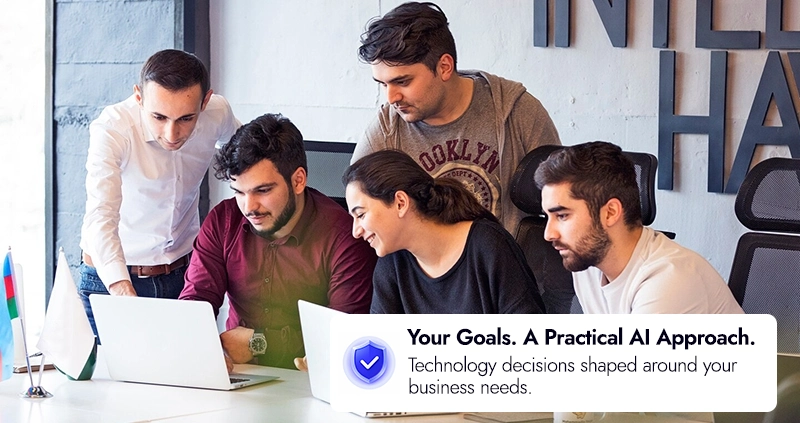
Choosing an AI development partner involves more than selecting a technology. Australian businesses need an approach that fits their objectives, existing systems, data requirements and operational constraints. Supportsoft Technologies works with clients to clarify requirements, evaluate suitable AI approaches and plan solutions around practical business needs.

Requirements-Led Development
We define the intended use case, essential features and evaluation criteria before deciding how to approach the AI solution.

Relevant AI Expertise
Choose suitable techniques and technologies based on the problem, whether it involves language models, machine learning, document processing or workflow automation.

Clear Project Communication
Keep requirements, decisions, dependencies and priorities visible so the project remains aligned with agreed objectives.

Evaluation Before Release
Assess functionality, output quality and relevant failure cases against the requirements established for the project.

Data Privacy Considerations
Account for data sensitivity, access permissions and appropriate handling requirements when designing AI-enabled workflows.

Integration With Existing Systems
Consider how the solution will connect with relevant applications, data sources and business processes before implementation.

Practical Scope and Expectations
Identify dependencies, technical limitations and success criteria early so proposed solutions remain grounded in the project's requirements.

Support and Future Improvements
Where included in the agreed engagement, address post-launch issues, evaluate performance and identify opportunities for further development.
Frequently Asked Questions
Everything you need to know about our enterprise AI development, integration processes, and engagement models.
Have a specific question?
Our AI experts are ready to help. Contact Our TeamReady to Put AI to
Work in Your Business?
Whether you're exploring an AI use case, integrating large language models, or improving business workflows with AI, tell us what you're looking to achieve. Our team can discuss your requirements and help you understand the practical next steps.
Let’s Build Something That Works.
Tell us what you're trying to achieve. We'll help you define the right technology, scope the opportunity, and determine the best next step.

What Happens Next?
Share your requirements, discuss your options with our team, and understand the next steps for your project.
Tell us about your project
Share your goals, challenges, timeline, and what you're looking to build.
Meet with our team
We'll discuss your requirements and ask the right questions.
Explore the right approach
We'll identify the technology, scope, and potential next steps.
Get a clear path forward
No pressure. Just practical recommendations based on your business.
Tell Us About Your Project
Share a few details so we can understand what you're looking for.