From Idea to App Store: The 6-Step Process Used by Top Sydney App Developers

Content Team Jul 09, 2026
Creating a successful mobile application involves having good ideas; however, transforming those ideas into successful mobile applications requires much more than just programming. Transforming an idea into a mobile application requires planning, researching, testing, and ongoing enhancement. Excellent developers follow a methodology that reduces risk and enhances the quality of the generated app. Many businesses want their applications to provide users with real value.
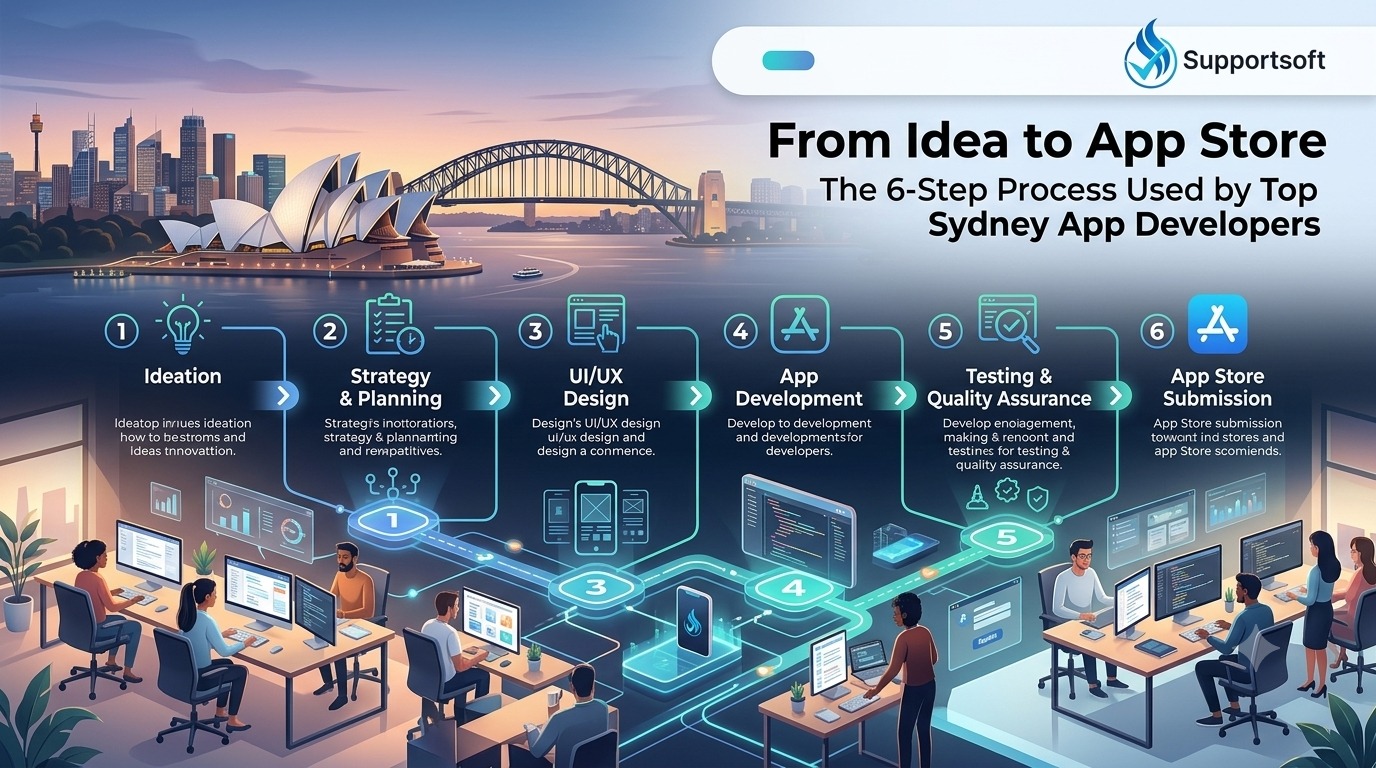
In addition to providing real value, businesses also believe smooth performance, attractive user interface(s), and security are necessary component parts of any mobile application. Experienced app developers Sydney follow an established development method (roadmap) so that every phase of the app development process will ultimately combine to yield a better final mobile application. Let's take a moment to review the six basic types of steps that leading app developers use to turn a concept into a successful mobile application.
Step 1 – The Business Idea
At the beginning of every single project is a discovery phase where the team of software developers learns about the company, its business objectives and the expected market and consumer groups. At this point the developers aim to understand clearly the problem the app is going to solve.
During the same period of development, market research is undertaken. Competitors are observed, market needs are identified, and user needs are studied to seek an innovation. At this stage the groundwork laid may save a great deal of wasted time. At the end of the discovery period there should be a clear vision and aim for what the product should be.
Step 2 – Define Features and Build a Strategy
Developers know all the app possibilities before they brainstorm all the requirements. It's about figuring out how best to serve the end users – not cramming every single possible feature in, just the ones they actually require.
They then choose the optimum technology stack for the native app, cross-platform app or hybrid app, keeping in mind the ultimate goals and budget. The development roadmap outlines milestones, required activities and testing as well as the launch date and other important information.
Step 3 – Design an Engaging User Experience
Top Apps Make It User-Friendly One key ingredient in the app development recipe is user friendliness. What good is some amazing functionality if customers can’t find the functions? Designing wireframes helps lay out user interface user flows to map the way users navigate through the app.
After this is approved, designers can create polished user interface designs with engaging colours, typography and iconography to communicate the interface to be able to be translated into a coded solution.
Usability is prioritised with everything from button placement to navigation to how screens are loading within the app. The leading Sydney app developers appreciate that ease of use often results in customer satisfaction. A smooth user experience equals positive reviews.
Step 4 - Develop the Application
Once a design is approved, the development team starts to develop the application. This involves breaking the project into manageable pieces that the developers work on during iterative development cycles. Front-end developers are responsible for designing user interfaces the users will be able to navigate through.
Back-end developers are the professionals who will be building the database, server and APIs of the applications behind the interface. During this phase of development, the teams conduct multiple code reviews to test the efficiency and quality of the code and decrease technical problems to the minimum.
The development team must be communicating regularly to the client through progress reports and feedback. With new development methods available in modern days, companies can always follow the progress without having to wait until the project is complete.
Step 5 - Test Every Feature Carefully
A top crucial stage in the process is app testing. An even minimal bug can be so severe that it compromises your user's trust in your application, earning you an unfavourable appraisal. The developers' team working behind QA carry out tests for almost all the functions, whether they are on various platforms, devices or any operating systems.
They conduct button testing, speed checkups, data security checks, speed tests, security tests and UI tests. By and large, they try to uncover possible loopholes with quality assurance. User feedback accumulated from these test results helps the developers to rectify the issues. With the best app developers Sydney team, this stage does not ever have to hurry.
Step 6 - Launch, Monitor and Improve
Getting it into stores is just step one. Developers ready their app by adhering to App Store and Google Play guidelines. It also means tweaking their descriptions, screenshots, and metadata in order to gain visibility in searches. The team keeps track of what users are doing on the app, both in terms of behaviour and performance through app analytics and usage tracking.
Using this, the team will review user ratings and reviews to look for ways to iterate and improve the app further down the line. Developers also release new app versions to address issues with security and add features or updates to match updated operating systems and shifting user expectations. But even with the most successful apps out there, development doesn’t simply cease at launch. Successful mobile applications maintain a growth strategy.
Why a Structured Process Matters
Many app projects fail due to a lack of planning or testing. A structured development process will help to reduce uncertainty and improve the level of collaboration between clients, designers, developers, and testers. This would be the research stage, which will pave the way for the design stage; the design process will make development easier and in turn, development will help testing to verify the app ticks the right boxes, and then maintenance will ensure it continues to update and be of service to users after it is developed.
If there’s a clear work process, then a business is better placed to stay within its budget, as delays don’t crop up unplanned at random intervals, and there is a reduced likelihood of needing to rethink it all after it’s completed. Expert Sydney app developers all know the significance of an executed path to a great final product, and they can share that knowledge to prevent other companies from making the same common errors in the process of developing a digital product.
Conclusion
A successful application is created through a process rather than simply using a solid concept for an application. Each stage (planning & design, build, test, and launch) helps create a successful app, and therefore, all stages are essential to the application's success. Working with experienced developers will help create an application that engages the end-user and creates a successful application long-term by following a proven process.